
AI SEO tools use machine learning to handle tasks that used to require hours of manual research and implementation, from analyzing what the top-ranking pages for a keyword actually cover to automatically deploying a fix across an entire site. This guide is for marketers, SEO managers, and agencies deciding which AI SEO tools genuinely earn a place in their workflow in 2026. You will learn the three functional tiers these tools fall into, which platforms lead in each one, and how to choose based on how much automation your team actually wants rather than which brand has the most name recognition.
The Three Tiers of AI SEO Tools
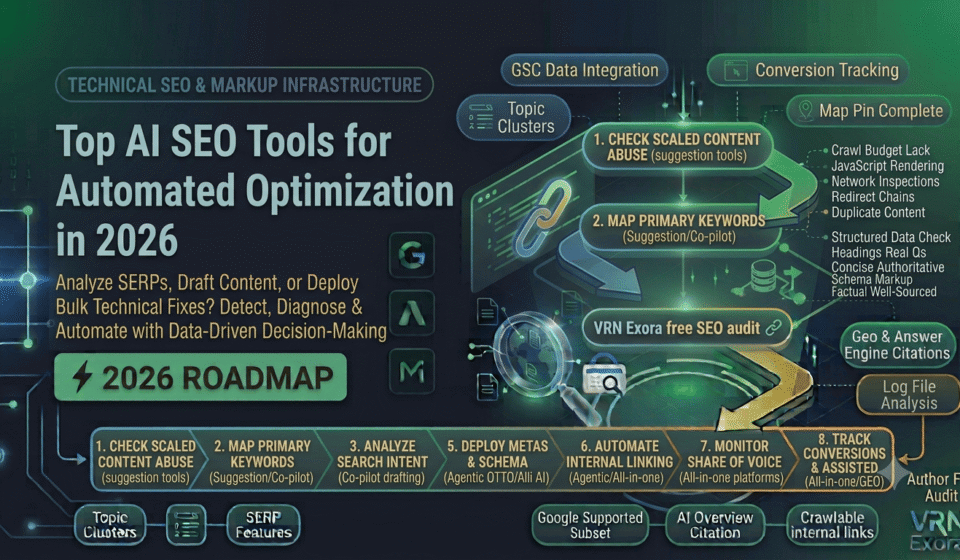
Nearly every AI SEO tool on the market in 2026 fits into one of three functional tiers, and understanding this framework matters more than memorizing brand names, since it tells you what a tool actually does rather than what its marketing claims. Suggestion tools analyze top-ranking content and tell you what to write, without writing it for you. Co-pilot tools go a step further and actively help you draft the content itself, working alongside a human editor rather than replacing one. Agentic tools go furthest of all, autonomously deploying changes like meta tags, schema markup, and internal links directly to a live site without requiring manual implementation.
Pick a tier based on your actual workflow and risk tolerance, not on which category sounds most advanced. A small team that wants full control over every published word has different needs than an agency managing dozens of client sites that genuinely benefits from bulk, automated technical fixes.
Suggestion Tools: Clearscope, NeuronWriter, and MarketMuse
Suggestion tools analyze the search results for a target keyword and tell you what topics, terms, and questions the top-ranking pages cover, leaving the actual writing entirely to a human. Clearscope grades content from A to F based on term and relevance signals pulled from top-ranking pages, and its workflow centers on optimization, content inventory, and team collaboration rather than first-draft production. NeuronWriter offers a similar core function at a considerably lower entry price, with multi-language support that makes it a strong value option for solo bloggers and smaller teams. MarketMuse rounds out this tier with a strong focus on topical coverage analysis for teams planning broader content strategy rather than optimizing a single article at a time.
Best for: Editorial teams and writers who want data-driven guidance on what to cover, while keeping full control over the actual drafting and voice.
Co-Pilot Tools: Surfer SEO, Frase, and Ahrefs AI
Co-pilot tools sit one step further along the automation spectrum, actively assisting with the writing process itself rather than only scoring a finished draft. Surfer SEO combines SERP-based content scoring with an AI drafting feature, audits, and brand-context tools in one workspace, and it is consistently rated among the strongest options for teams working within a traditional, Google-first optimization workflow. Frase builds detailed content briefs directly from SERP research and has expanded into a broader AI agent with dozens of specific skills beyond brief generation alone. Ahrefs has added its own AI Content Helper alongside deeper keyword and backlink data than either Surfer or Frase natively offers, making it attractive for teams that want AI drafting support layered on top of Ahrefs’s existing research depth.
Best for: Teams that want meaningful drafting assistance to speed up production, while still keeping an editor firmly in control of the final published piece.
Agentic Tools: Search Atlas OTTO and Alli AI
Agentic tools represent the most automated tier currently available, deploying changes directly to a live site rather than only generating a recommendation for a human to implement. Search Atlas OTTO is widely regarded as the clearest example of this category, autonomously pushing meta tag updates, schema fixes, internal linking changes, and even Google Business Profile updates through a single tracking pixel installed on any CMS. Alli AI takes a similar automated approach specifically for technical on-page changes, updating title tags, meta descriptions, and schema markup in bulk across an entire site, which agencies managing many client sites often find particularly valuable for handling repetitive technical work at scale.
This tier carries a real tradeoff worth naming directly: some users have reported persistent automation bugs with OTTO’s core feature, and any agentic tool that pushes live changes without a review step deserves closer monitoring than a suggestion or co-pilot tool that only ever proposes a change for a human to approve first.
Best for: Agencies and larger teams managing many sites that need bulk technical fixes deployed at scale, provided the automation is monitored rather than left entirely unsupervised.
All-in-One Platforms: Semrush and Search Atlas
For teams that want research, content optimization, technical auditing, and AI search visibility tracking inside a single subscription, Semrush and Search Atlas lead this category. Semrush combines keyword research, competitor analysis, site audits, rank tracking, content optimization, and AI visibility reporting in one integrated dashboard, which reduces tool switching and speeds up prioritization across a broader SEO program. Search Atlas covers a similarly broad feature set, including content optimization, keyword research, backlink intelligence, technical audits, and the OTTO automation layer, aimed specifically at agencies that need white-label reporting for client deliverables alongside the platform’s core functionality.
Best for: Teams and agencies that want to consolidate multiple SEO functions into one platform rather than managing several point solutions separately.
Jasper: Best for Brand Voice-Consistent AI Writing
Jasper takes a more narrow, writing-focused approach, with a specific feature for training the system on a brand’s existing voice so generated content sounds more like the company producing it and less like generic AI output. It integrates directly with Surfer SEO, allowing a team to combine Jasper’s voice consistency with Surfer’s SERP-based optimization scoring in one connected workflow.
Best for: Brands with a distinctive voice that want AI-assisted drafting without sacrificing consistency across every piece of published content.
Why Human Review Still Matters No Matter Which Tier You Use
Across every tier, one consistent finding holds true: AI-generated drafts and suggestions reduce production time but do not replace an experienced editor. Content generated by even the strongest AI writing tools still requires factual verification, removal of repetitive phrasing, stronger sourcing, and genuine editorial judgment before it should be published. This applies with even more weight to agentic tools, since a change deployed automatically and incorrectly affects a live site immediately, rather than sitting in a draft waiting for review the way a suggestion or co-pilot tool’s output does.
How to Choose the Right Tier for Your Team
Start by being honest about how much control your team actually wants to keep over published content and live technical changes. A solo blogger or small content team publishing a handful of articles a month typically gets most of the practical value from a lower-cost suggestion tool, without needing the deeper automation or AI visibility tracking that a full platform provides. A team publishing five or more pieces a month and actively tracking AI search visibility across ChatGPT, Gemini, and Perplexity benefits more from a broader platform that bundles content optimization with AI visibility reporting. An agency managing many client sites with repetitive technical maintenance needs is the clearest fit for an agentic tool, provided someone on the team actively monitors what gets deployed rather than treating the automation as fully hands-off.
| Tier | What it does | Example tools |
|---|---|---|
| Suggestion | Analyzes top results and tells you what to write | Clearscope, NeuronWriter, MarketMuse |
| Co-pilot | Helps draft the content alongside a human editor | Surfer SEO, Frase, Ahrefs AI |
| Agentic | Autonomously deploys changes to a live site | Search Atlas OTTO, Alli AI |
| All-in-one platform | Combines research, content, technical, and AI visibility in one dashboard | Semrush, Search Atlas |
Frequently Asked Questions
What is the difference between a suggestion tool and a co-pilot tool?
A suggestion tool, like Clearscope or NeuronWriter, tells you what topics and terms to cover based on top-ranking content but leaves the writing entirely to you. A co-pilot tool, like Surfer or Frase, actively assists with drafting the content itself alongside a human editor.
Is it safe to let an AI tool automatically deploy changes to my live site?
It can be, but it carries more risk than a suggestion or co-pilot tool, since an agentic tool’s changes go live immediately. Monitor agentic automation closely, particularly early on, rather than treating it as fully hands-off, since some users have reported persistent bugs even with established agentic platforms.
Do I still need a human editor if I use an AI writing tool?
Yes. AI-generated drafts consistently require factual verification, removal of repetition, stronger sourcing, and editorial refinement before publishing, regardless of which platform generated the initial draft.
Which AI SEO tool is best for a solo blogger on a budget?
Lower-cost suggestion tools like NeuronWriter typically deliver most of the practical value a solo blogger needs at a fraction of the cost of a full all-in-one platform, provided the volume of content being published stays modest.
Do AI SEO tools also help with AI search visibility, not just Google rankings?
Increasingly, yes. Several all-in-one platforms, including Semrush and Search Atlas, now bundle AI visibility tracking across ChatGPT, Gemini, and Perplexity alongside their traditional SEO features, reflecting how much search behavior has shifted toward AI-generated answers.
Should an agency use an agentic tool for managing multiple client sites?
Agentic tools like Search Atlas OTTO or Alli AI are genuinely valuable for agencies handling repetitive technical work like meta tags and schema across many sites, but the automation still benefits from active human oversight rather than being left completely unsupervised.
Get a Free Expert Review of Your SEO Stack
Choosing the right AI tools is easier once you know exactly where your current SEO stands. If you want a faster starting point, get a free SEO audit from VRN Exora and see what’s actually worth automating first.