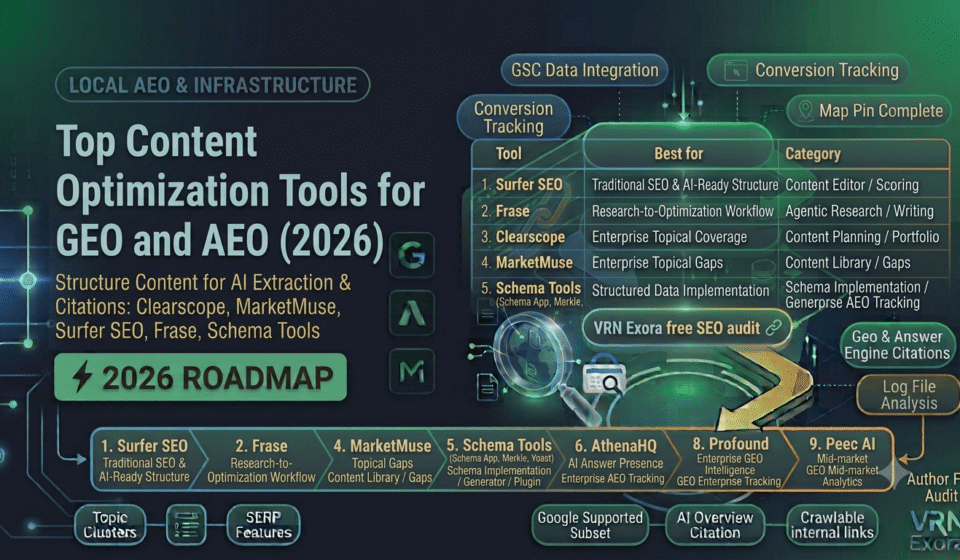

Content optimization tools for GEO and AEO help structure a page so AI systems can actually extract, understand, and cite it, which is a genuinely different job than traditional keyword-based content optimization. This guide is for content teams, SEO managers, and marketers who want to know which platforms actually help with the content-structuring side of AI search visibility, separate from the tools that only measure whether you are already being cited. You will learn what makes content genuinely AI-ready, which tools lead in this specific category, and where content optimization tools stop and dedicated visibility tracking needs to pick up.
What Makes Content “AI-Ready” in the First Place
AI-optimized content shares a consistent set of characteristics regardless of which platform is doing the citing. It uses clear, descriptive headings that map to real questions, provides concise and authoritative answers early in each section rather than burying them in introductory framing, includes comprehensive structured data through schema markup, explicitly defines entities and their relationships rather than relying on implied context, and maintains strong E-E-A-T signals throughout. Content also needs to be factual and well-sourced, since thin or ambiguous statements are exactly what AI models struggle to parse and extract cleanly.
A separate and increasingly cited statistic is worth keeping in mind while evaluating any of these tools: research has found that only a small minority of URLs cited by AI systems like ChatGPT, Gemini, and Copilot also rank in Google’s top ten for the same query, which means optimizing purely for traditional Google rankings does not automatically translate into AI citation, and a dedicated content optimization approach genuinely matters.
Surfer SEO: Best for Combining Traditional SEO Scoring With AI-Ready Structure
Surfer SEO’s content editor helps writers structure and score pages so they perform well in both traditional search and AI-generated answers at once, making it one of the most commonly recommended tools for teams that do not want to run two entirely separate optimization workflows. Its core strength remains SERP-based content scoring and term guidance, with AI-readiness features layered on as an increasingly central part of the product rather than a bolt-on afterthought.
Worth noting directly: Surfer is fundamentally an SEO-first tool, so AEO optimization is a genuine but secondary benefit of its design, and it does not track how content actually performs in AI search results after publishing, meaning a separate tool is still needed to measure the outcome of what Surfer helps you optimize.
Best for: Content teams that want one editor covering both Google-first and AI-first optimization without switching tools mid-workflow.
Frase: Best for Agentic Research-to-Optimization Workflows
Frase combines SEO research, content optimization, and AI search tracking in a single platform, and its AI Agent extends this further by handling research, writing, and optimization as one connected agentic workflow rather than a series of separate manual steps. This makes Frase one of the more complete options in the category for teams that want to move from a content gap to a published, AI-ready page with fewer manual handoffs along the way.
Best for: Teams that want research, drafting, and AI-readiness scoring handled inside one connected workflow rather than stitched together across multiple tools.
Clearscope and MarketMuse: Best for Enterprise Topical Coverage
Clearscope and MarketMuse both focus on enterprise-scale content planning and topical coverage rather than single-article optimization alone. Clearscope offers deeper content planning, topical coverage analysis, and portfolio monitoring aimed at larger editorial teams managing many writers and reviewers at once. MarketMuse takes a similar enterprise-oriented approach, with particular strength in identifying topical gaps across a broader content library rather than scoring one draft in isolation.
Best for: Larger editorial operations that need topical coverage planning and portfolio-level oversight, not just per-article scoring.
Schema App, Merkle Schema Generator, and Yoast: Best for Structured Data Implementation
Structured data remains one of the clearest, most concrete signals AI systems use to understand and display content, particularly for products, FAQs, and reviews, which makes dedicated schema tools a genuine part of any serious GEO and AEO content stack rather than an optional extra. Schema App specializes specifically in structured data implementation and management at scale, aimed at teams that need schema applied consistently across many pages or templates. Merkle’s Schema Generator offers a simpler, more accessible way to build and validate individual schema blocks without a full platform subscription. Yoast, widely used as a WordPress SEO plugin, bakes basic schema generation directly into the publishing workflow for teams that want structured data handled